Law of Consecration
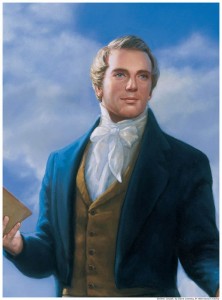
As the Saints were gathering to Kirtland, many of them were leaving all of their possessions behind to obey the commandment of God. Others were poor to begin with. Joseph saw how so many were suffering and turned to the Lord to inquire what should be done. Joseph had discovered a group of about fifty people in Ohio, former followers of Sidney Rigdon, who had established a system whereby they could sustain one another. They based their model for this manner of society off their interpretation of Acts 2:44–45 and 4:32. Either there were not enough guidelines laid out or some of the people in the community were not prepared for the spirit of this law, and it was having problems. Joh Whitmer reported that when he arrived he discovered a man named Heman Bassett had taken a pocket watch which belonged to a man named Levi Hancock and sold it without asking. When someone asked why he had done this, he said, “Oh, I thought it was all in the familhy.”
 The
principles that this small community were trying to live, however, were
pure, and Joseph recognized the need the Saints had for a system which
would meet the Church’s growing economic needs. In response to Joseph’s
inquiry, the Lord reminded his people that everything on the earth was
His and that everything an individual owned was given him by the Lord.
The Lord makes His children stewards over certain belongings, but can
call to use them at any time. Thus came the Law of Consecration.
The
principles that this small community were trying to live, however, were
pure, and Joseph recognized the need the Saints had for a system which
would meet the Church’s growing economic needs. In response to Joseph’s
inquiry, the Lord reminded his people that everything on the earth was
His and that everything an individual owned was given him by the Lord.
The Lord makes His children stewards over certain belongings, but can
call to use them at any time. Thus came the Law of Consecration.Under this law, all members were instructed to give all their property to the Church. Members would then be given stewardships of sufficient size to provide for their families. At the end of each year everything earned in excess of their needs was given back to the Church in order to provide for those who were unable to provide enough for themselves. The Law of Consecration would also make it possible for the Church to buy land for its members who continued arriving in ever increasing numbers. They needed to build meetinghouses, and the temple the Lord commanded them to build.
The principles of the Law of Consecration were and are noble. The spirit of this law is for each person to work hard, be industrious, and live by the Spirit of the Lord. The Law of Consecration provides for widows and orphans and, if lived correctly, would allow new immigrants to have a new start. Mormons believe this law to be celestial, or God’s law, rather than one of this world.
The Law of Consecration was first given to the Saints in Kirtland, Ohio, in February 1831. It was extended to the Saint in Missouri in April 1832, when the United Order was established. This meant that both Church centers pooled their resources in order to care for all the members of the Church. However, in April 1834, the Lord commanded that each center be in charge of its own people. There would no longer be a United Order of Kirtland and Zion, but rather one for each. At the end of Zion’s Camp, in June 1834, however, the Lord chastised His people for their sins and took the Law of Consecration from the earth until Zion should be redeemed. This was due to the imperfections in some of the Saints, who were unwilling to live the spirit of this law, causing it to become corrupted. http://historyofmormonism.com/mormon-history/two-church-centers/tcc-1831/law-of-consecration/
First Presidency Message
Living the Principles of the Law of Consecration
Living the Principles of the Law of Consecration
The
law of consecration was revealed early in this last dispensation. On
the second day of January 1831, through the Prophet Joseph Smith, the
Lord said to his infant church, not yet a year old:
“Let every man esteem his brother as himself.
“For
what man among you having twelve sons, and is no respecter of them, and
they serve him obediently, and he saith unto the one: Be thou clothed
in robes and sit thou here; and to the other: Be thou clothed in rags
and sit thou there—and looketh upon his sons and saith I am just?
“Behold,
this I have given unto you as a parable, and it is even as I am. I say
unto you, be one; and if ye are not one ye are not mine.” (D&C 38:25–27)
Thirty-eight
days later, 9 February 1831, the Lord revealed the law of consecration
as the means by which the inequality between the rich and the poor could
be removed. These are his words:
“If thou lovest me thou shalt serve me and keep all my commandments.
“And
behold, thou wilt remember the poor, and consecrate of thy properties
for their support that which thou hast to impart unto them, with a
covenant and a deed which cannot be broken.
“And
inasmuch as ye impart of your substance unto the poor, ye will do it
unto me; and they shall be laid before the bishop of my church and his
counselors, two of the elders, or high priests, such as he shall appoint
or has appointed and set apart for that purpose.
“And
it shall come to pass, that after they are laid before the bishop of my
church, and after that he has received these testimonies concerning the
consecration of the properties of my church, that they cannot be taken
from the church, agreeable to my commandments, every man shall be made
accountable unto me, a steward over his own property, or that which he
has received by consecration, as much as is sufficient for himself and
family.” (D&C 42:29–32)
The
basic principle and the justification for the law of consecration “is
that everything we have belongs to the Lord; therefore, the Lord may
call upon us for any and all of the property which we have, because it
belongs to Him. … (D&C 104: 14–17, 54–57)” (J. Reuben Clark, Jr., in Conference Report, Oct. 1942, p. 55)
The
intent of the law of consecration was that every man is to be “equal
according to his family, according to his circumstances and his wants
and needs.” (D&C 51:3)
Under it, every man, including the poor, was to receive a “‘portion’ …
such as would make him equal to others according to his circumstances,
his family, his wants and needs.
“The
land which you received from the bishop by deed, whether it was part of
the land which you, yourself, had deeded to the Church, or whether it
came as an out-right gift from the Church … and the personal property
which you received, were all together sometimes called a ‘portion’ (D&C 51:4–6), sometimes a ‘stewardship’ (D&C 104:11–12), and sometimes an ‘inheritance.’ (D&C 83:3)” (J. Reuben Clark, Jr., in Conference Report, Oct. 1942, p. 56)
The
Saints in Jackson County, Missouri, organized a “united order” and
attempted to live the law of consecration. They failed, however, and
were expelled from Missouri.
The Lord explained the reason for their failure and afflictions as follows:
“Verily
I say unto you who have assembled yourselves together that you may
learn my will concerning the redemption of mine afflicted people—
“Behold,
I say unto you, were it not for the transgressions of my people,
speaking concerning the church and not individuals, they might have been
redeemed even now.
“But
behold, they have not learned to be obedient to the things which I
required at their hands, but are full of all manner of evil, and do not
impart of their substance, as becometh saints, to the poor and afflicted
among them;
“And are not united according to the union required by the law of the celestial kingdom;
“And
Zion cannot be built up unless it is by the principles of the law of
the celestial kingdom; otherwise I cannot receive her unto myself.
“And my people must needs be chastened until they learn obedience, if it must needs be, by the things which they suffer.
“Therefore,
in consequence of the transgressions of my people, it is expedient in
me that mine elders should wait for a little season for the redemption
of Zion—
“That
they themselves may be prepared, and that my people may be taught more
perfectly, and have experience, and know more perfectly concerning their
duty, and the things which I require at their hands.” (D&C 105:1–6, 9–10)
So ended the first attempt to implement the law of consecration.
In
October of 1936, about one hundred years after the termination of the
law of consecration experience, the First Presidency of the Church
announced the organization of the welfare program.
President J. Reuben Clark, Jr., its principal architect, said concerning the welfare program and the united order:
“We
have all said that the Welfare Plan is not the United Order and was not
intended to be. However, I should like to suggest to you that perhaps,
after all, when the Welfare Plan gets thoroughly into operation … we
shall not be so very far from carrying out the great fundamentals of the
United Order.
“In
the first place I repeat again, the United Order recognized and was
built upon the principle of private ownership of property; all that a
man had and lived upon under the United Order, was his own. Quite
obviously, the fundamental principle of our system today is the
ownership of private property.
“In
the next place, in lieu of residues and surpluses which were
accumulated and built up under the United Order, we, today, have our
fast offerings, our Welfare donations, and our tithing, all of which may
be devoted to the care of the poor, as well as for the carrying on of
the activities and business of the Church. After all, the United Order
was primarily designed to build up a system under which there should be
no abjectly poor, and this is the purpose, also, of the Welfare Plan.
“In
this connection it should be observed that it is clear from these
earlier revelations, as well as from our history, that the Lord had very
early to tell the people about the wickedness of idleness, and the
wickedness of greed, because the brethren who had were not giving
properly; and those who had not were evidently intending to live without
work on the things which were to be received from those who had
property. …
“Furthermore,
we had under the United Order a bishop’s storehouse in which were
collected the materials from which to supply the needs and the wants of
the poor. We have a bishop’s storehouse under the Welfare Plan, used for
the same purpose.
“As
I have already indicated, the surplus properties which came to the
Church under the Law of Consecration, under the United Order, became the
‘common property’ of the Church … and were handled under the United
Order for the benefit of the poor. We have now under the Welfare Plan
all over the Church, ward land projects. In some cases the lands are
owned by the wards, in others they are leased by the wards or lent to
them by private individuals. This land is being farmed for the benefit
of the poor, by the poor where you can get the poor to work it. …
“Thus
you will see, brethren, that in many of its great essentials, we have,
as the Welfare Plan has now developed, the broad essentials of the
United Order. Furthermore, having in mind the assistance which is being
given from time to time and in various wards to help set people up in
business or in farming, we have a plan which is not essentially unlike
that which was in the United Order when the poor were given portions
from the common fund.” (In Conference Report, Oct. 1942, p. 57–58)
In
light of the fact that we are not now required to live the law of
consecration and the further fact that we have the welfare program
which, as President Clark said, if put “thoroughly into operation … we
shall not be … far from carrying out the great fundamentals of the
United Order,” I suppose the best way to live the principles of the law
of consecration is to abide by the principles and practices of the
welfare program.
These
principles and practices include avoiding idleness and greed,
contributing liberal fast offerings and other welfare donations, paying a
full tithing, and complying with the purpose for which the First
Presidency organized the program, which they thus stated:
“Our
primary purpose was to set up, in so far as it might be possible, a
system under which the curse of idleness would be done away with, the
evils of a dole abolished, and independence, industry, thrift and self
respect be once more established amongst our people. The aim of the
Church is to help the people to help themselves. Work is to be
re-enthroned as the ruling principle of the lives of our Church
membership.” (In Conference Report, Oct. 1936, p. 3) https://www.lds.org/ensign/1979/02/living-the-principles-of-the-law-of-consecration?lang=eng
The
law of consecration and stewardship is the highest manifestation of
gospel living. Many view this law as only a temporal economic program,
but it is a spiritual command as well (see D&C 29:35).
The personal requirements for celestial living are also the foundation
for the successful practice of this holy and ancient order of gospel
life. It is the basis upon which Zion, the New Jerusalem, is to be built
and the preparations completed for the glorious Messianic reign (see Enrichment B).
President
George Q. Cannon taught: “The time must come when we must obey that
which has been revealed to us as the Order of Enoch, when there shall be
no rich and no poor among the Latter-day Saints; when wealth will not
be a temptation; when every man will love his neighbor as he does
himself; when every man and woman will labor for the good of all as much
as for self. That day must come, and we may as well prepare our hearts
for it, brethren, for as wealth increases I see more and more a
necessity for the institution of such an order. As wealth increases,
luxury and extravagance have more power over us. The necessity for such
an order is very great, and God, undoubtedly, in his own time and way,
will inspire his servant [the prophet] to introduce it among the
people.” (In Journal of Discourses, 15:207.)
The scriptures further describe some of the characteristics of those who
strive to live the principles of Zion. Unity is of primary importance:
“If ye are not one ye are not mine,” said the Lord (D&C 38:27). Zion requires that all be of “one heart and … one mind” (D&C 45:65).
Sacrifice
is the principle through which the individual is able to practice the
law of consecration. Elder Bruce R. McConkie explained: “I shall now set
forth some of the principles of sacrifice and consecration to which the
true saints must conform if they are ever to go where God and Christ
are and have an inheritance with the faithful saints of ages past.
“… The law of sacrifice is a celestial law; so is the law of consecration. …
“Sacrifice
and consecration are inseparably intertwined. The law of consecration
is that we consecrate our time, our talents, and our money and property
to the cause of the Church; such are to be available to the extent they
are needed to further the Lord’s interests on earth.
“The
law of sacrifice is that we are willing to sacrifice all that we have
for the truth’s sake—our character and reputation; our honor and
applause; our good name among men; our houses, lands, and families; all
things, even our very lives if need be.
“Joseph
Smith said, ‘A religion that does not require the sacrifice of all
things never has power sufficient to produce the faith necessary [to
lead] unto life and salvation.’ (Lectures on Faith, p. 58.)
“We
are not always called upon to live the whole law of consecration and
give all of our time, talents, and means to the building up of the
Lord’s earthly kingdom. Few of us are called upon to sacrifice much of
what we possess, and at the moment there is only an occasional martyr in
the cause of revealed religion.
“But what the scriptural account means is that to gain celestial salvation we must be able
to live these laws to the full if we are called upon to do so. Implicit
in this is the reality that we must in fact live them to the extent we
are called upon so to do. …
“Now
I think it is perfectly clear that the Lord expects far more of us than
we sometimes render in response. We are not as other men. We are the
saints of God and have the revelations of heaven. Where much is given
much is expected. We are to put first in our lives the things of his
kingdom.” (In Conference Report, Apr. 1975, pp. 74–76; or Ensign, May 1975, pp. 50–51.)
(L-6) The Lord’s Way Versus the World’s Way
Some
have suggested that the practice of the law of consecration and the
system of the united order are only a religious kind of socialism or
communism. Others assert that it was a development either from the
economic philosophies of Joseph Smith’s day or from communal experiments
within the new religion. Such assumptions are false. The Prophet Joseph
Smith attended a presentation on socialism in September 1843 at Nauvoo.
His response was to declare that he “did not believe the doctrine” (History of the Church,
6:33). In more recent times Elder Marion G. Romney outlined the
differences between the revealed system of the united order and the
socialistic programs:
“(1)
The cornerstone of the United Order is belief in God and acceptance of
him as Lord of the earth and the author of the United Order.
“Socialism,
wholly materialistic, is founded in the wisdom of men and not of God.
Although all socialists may not be atheists, none of them in theory or
practice seek the Lord to establish his righteousness.
“(2)
The United Order is implemented by the voluntary free-will actions of
men, evidenced by a consecration of all their property to the Church of
God.
“… Socialism is implemented by external force, the power of the state.
“(3) … The United Order is operated upon the principle of private ownership and individual management.
“Thus
in both implementation and ownership and management of property, the
United Order preserves to men their God-given agency, while socialism
deprives them of it.
“(4) The United Order is non-political.
“Socialism
is political, both in theory and practice. It is thus exposed to, and
riddled by, the corruption that plagues and finally destroys all
political governments that undertake to abridge man’s agency.
“(5) A righteous people is a prerequisite to the United Order.
“Socialism argues that it as a system will eliminate the evils of the profit motive.
“The
United Order exalts the poor and humbles the rich. In the process both
are sanctified. The poor, released from the bondage and humiliating
limitations of poverty, are enabled as free men to rise to their full
potential, both temporally and spiritually. The rich, by consecration
and by imparting of their surplus for the benefit of the poor, not by
constraint but willingly as an act of free will, evidence that charity
for their fellowmen characterized by Mormon as ‘the pure love of
Christ.’ [Moroni 7:47.]” (In Conference Report, Apr. 1966, p. 97.)
President
J. Reuben Clark Jr. said: “The United Order has not been generally
understood. … [It] was not a communal system. … The United Order and
communism are not synonymous. Communism is Satan’s counterfeit for the
United Order. There is no mistake about this and those who go about
telling us otherwise either do not know or have failed to understand or
are wilfully misrepresenting.” (In Conference Report, Oct. 1943, p. 11.)
President
Marion G. Romney warned about the continuing imitations of the
adversary: “In this modern world plagued with counterfeits for the
Lord’s plan, we must not be misled into supposing that we can discharge
our obligations to the poor and the needy by shifting the responsibility
to some governmental or other public agency. Only by voluntarily giving
out of an abundant love for our neighbors can we develop that charity
characterized by Mormon as ‘the pure love of Christ.’ [Moroni 7:47.]” (In Conference Report, Oct. 1972, p. 115; or Ensign, Jan. 1973, p. 98.)
President Romney noted:
“I suggest we consider what has happened to our agency with respect to … government welfare services. …
“The
difference between having the means with which to administer welfare
assistance taken from us and voluntarily contributing it out of our love
of God and fellowman is the difference between freedom and slavery. …
“When
we love the Lord our God with all our hearts, might, mind, and
strength, we will love our brothers as ourselves, and we will
voluntarily, in the exercise of our free agency, impart of our substance
for their support. …
“President [J. Reuben] Clark, … referring to government gratuities, said:
“‘The
dispensing of these great quantities of gratuities has produced in the
minds of hundreds of thousands—if not millions—of people … a love for
idleness, a feeling that the world owes them a living. It has made a
breeding ground for some of the most destructive political doctrines
that have ever found any hold, … and I think it may lead us into serious
political trouble. …
“‘… Society
owes to no man a life of idleness, no matter what his age. I have never
seen one line in Holy Writ that calls for, or even sanctions this. In
the past no free society has been able to support great groups in
idleness and live free.’ (CR, Apr. 1938, pp. 106–7.) …
“…
Both history and prophecy—and I may add, common sense—bear witness to
the fact that no civilization can long endure which follows the course
charted by bemused manipulators and now being implemented as government
welfare programs all around the world.
“Babylon shall be destroyed, and great shall be the fall thereof. (See D&C 1:16.)
“But
do not be discouraged. Zion will not go down with her, because Zion
shall be built on the principles of love of God and fellowman, work, and
earnest labor, as God has directed.” (In Conference Report, Apr. 1976,
pp. 164–66, 169; or Ensign, May 1976, pp. 120–21, 123.)
“Relying
always on the Lord, we must become independent of the world. We must be
self-reliant. Using the agency God has given us, we must work out our
own economic and temporal problems. …
“We
must maintain our own health, sow our own gardens, store our own food,
educate and train ourselves to handle the daily affairs of life. No one
else can work out our salvation for us, either temporally or
spiritually.
“We
are here on earth to care for the needs of our family members. Wives
have claim on their husbands for their support, children upon their
parents, parents upon their children, brothers upon each other, and
relatives upon their kin.
“It
is the aim of the Church to help the Saints to care for themselves and,
where need be, to make food and clothing and other necessities
available, lest the Saints turn to the doles and evils of Babylon. To
help care for the poor among them the Church must operate farms, grow
vineyards, run dairies, manage factories, and ten thousand other
things—all in such a way as to be independent of the powers of evil in
the world.” (In Conference Report, Apr. 1979, p. 132; or Ensign, May 1979, p. 93.)
(L-9) The Need for Spiritual Preparation
While
the Church program is the instrument of preparation for the future
Zion, its success depends on our personal preparation. President
Spencer W. Kimball taught:
“So
as to better visualize this process and firmly fix the specific
principles that undergird this work, may I rehearse to you what I
believe are its foundational truths.
“First is love.
The measure of our love for our fellowman and, in a large sense, the
measure of our love for the Lord, is what we do for one another and for
the poor and the distressed.
“‘A new commandment I give unto you, That ye love one another; as I have loved you, that ye also love one another.
“‘By this shall all men know that ye are my disciples, if ye have love one to another.’ (John 13:34–35; see Moro. 7:44–48 and Luke 10:25–37, 14:12–14.)
“Second is service.
To serve is to abase oneself, to succor those in need of succor, and to
impart of one’s ‘substance to the poor and the needy, feeding the
hungry, and suffering all manner of afflictions, for Christ’s sake.’ [Alma 4:13.]
“‘Pure
religion and undefiled before God and the Father is this, To visit the
fatherless and widows in their affliction, and to keep himself unspotted
from the world.’ (James 1:27.)
“Third is work.
Work brings happiness, self-esteem, and prosperity. It is the means of
all accomplishment; it is the opposite of idleness. We are commanded to
work. (See Gen. 3:19.)
Attempts to obtain our temporal, social, emotional, or spiritual
well-being by means of a dole violate the divine mandate that we should
work for what we receive. Work should be the ruling principle in the
lives of our Church membership. (See D&C 42:42; 75:29; 68:30–32; 56:17.)
“Fourth is self-reliance. The Church and its members are commanded by the Lord to be self-reliant and independent. (See D&C 78:13–14.)
“The
responsibility for each person’s social, emotional, spiritual,
physical, or economic well-being rests first upon himself, second upon
his family, and third upon the Church if he is a faithful member
thereof.
“No
true Latter-day Saint, while physically or emotionally able will
voluntarily shift the burden of his own or his family’s well-being to
someone else. So long as he can, under the inspiration of the Lord and
with his own labors, he will supply himself and his family with the
spiritual and temporal necessities of life. (See 1 Timothy 5:8.)
“Fifth is consecration,
which encompasses sacrifice. Consecration is the giving of one’s time,
talents, and means to care for those in need—whether spiritually or
temporally—and in building the Lord’s kingdom. In Welfare Services,
members consecrate as they labor on production projects, donate
materials to Deseret Industries, share their professional talents, give a
generous fast offering, and respond to ward and quorum service
projects. They consecrate their time in their home or visiting teaching.
We consecrate when we give of ourselves. (See Ensign, June 1976, pp. 3–6.)
“Sixth is stewardship.
In the Church a stewardship is a sacred spiritual or temporal trust for
which there is accountability. Because all things belong to the Lord,
we are stewards over our bodies, minds, families, and properties. (See D&C 104:11–15.) A faithful steward is one who exercises righteous dominion, cares for his own, and looks to the poor and needy. (See D&C 104:15–18.)
“These
principles govern welfare services activities. May we all learn, obey,
and teach these principles. Leaders, teach them to your members;
fathers, teach them to your families. Only as we apply these truths can
we approach the ideal of Zion.
As
President Marion G. Romney taught: “We’re living in the latter days.
We’re living in the days the prophets have told about from the time of
Enoch to the present day. We are living in the era just preceding the
second advent of the Lord Jesus Christ. We are told to so prepare and
live that we can be … independent of every other creature beneath the
celestial kingdom [see D&C 78:14]. That is what we are to do. …
“…
The final thing that we are to do is to be able and willing to
consecrate all that we have to the building up of the kingdom of God, to
care for our fellow men. When we do this we’ll be ready for the coming
of the Messiah.” (In Conference Report, Apr. 1975, pp. 165–66).

No comments:
Post a Comment